
Discovery and Basic Research
Matthew A. Borrelli, BS
PhD Candidate
University of Pittsburgh
Pittsburgh, Pennsylvania, United States
Matthew A. Borrelli, BS
PhD Candidate
University of Pittsburgh
Pittsburgh, Pennsylvania, United States
Stephen Balmert, Ph.D.
Instructor of Dermatology
University of Pittsburgh
Pittsburgh, Pennsylvania, United States
Jordan Warunek, BS
Graduate Student Researcher
University of Pittsburgh
Pittsburgh, Pennsylvania, United States
Tarini Ravikumar, BS
Undergraduate Student Researcher
University of Pittsburgh
Pittsburgh, Pennsylvania, United States
Steven Little, Ph.D.
Distinguished Professor and Department Chair
University of Pittsburgh
Pittsburgh, Pennsylvania, United States
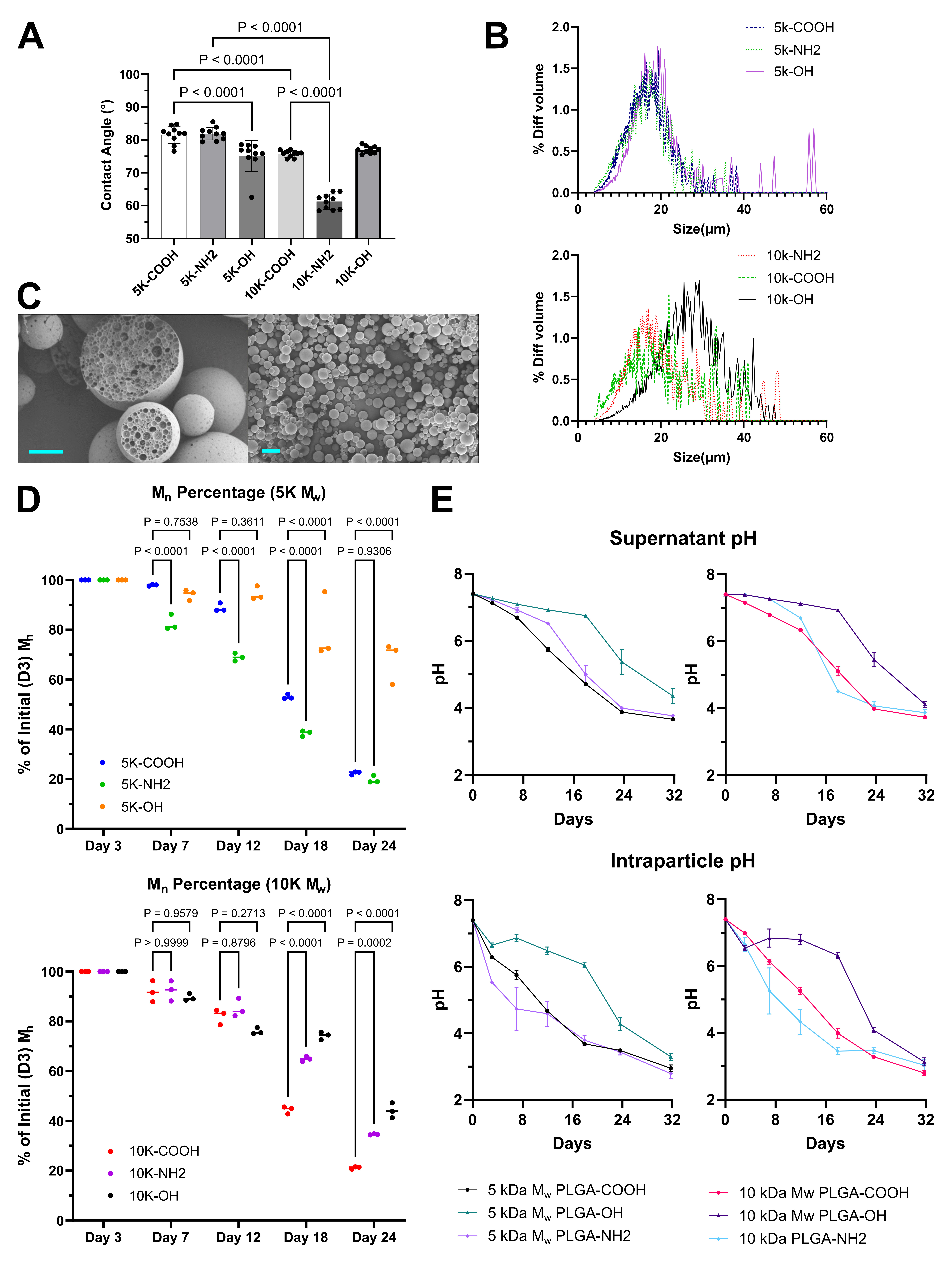 Figure 1 – Material Properties of Variable End-Cap Group PLGA Microparticles. Main point of this figure (A) Wetted Contact Angle (WCA) measurements of variable end-cap group PLGA Polymer. (B) Microparticle size distribution for unloaded microparticles (MP). (C) Representative SEM images of MP interior cross section (Left, scale bar 10µm) and morphology (Right, scale bar 30µm). (D) Number weighted molecular weight (Mn) of PLGA MP normalized to the measured Mn measured on Day 3 of a degradation assay. Mn data was measured via size exclusion chromatography (SEC) calibrated to a polystyrene Mn standard curve. (E) pH evolution in the supernatant and inside the MP, data represents mean ± SD from n = 3 replicates.
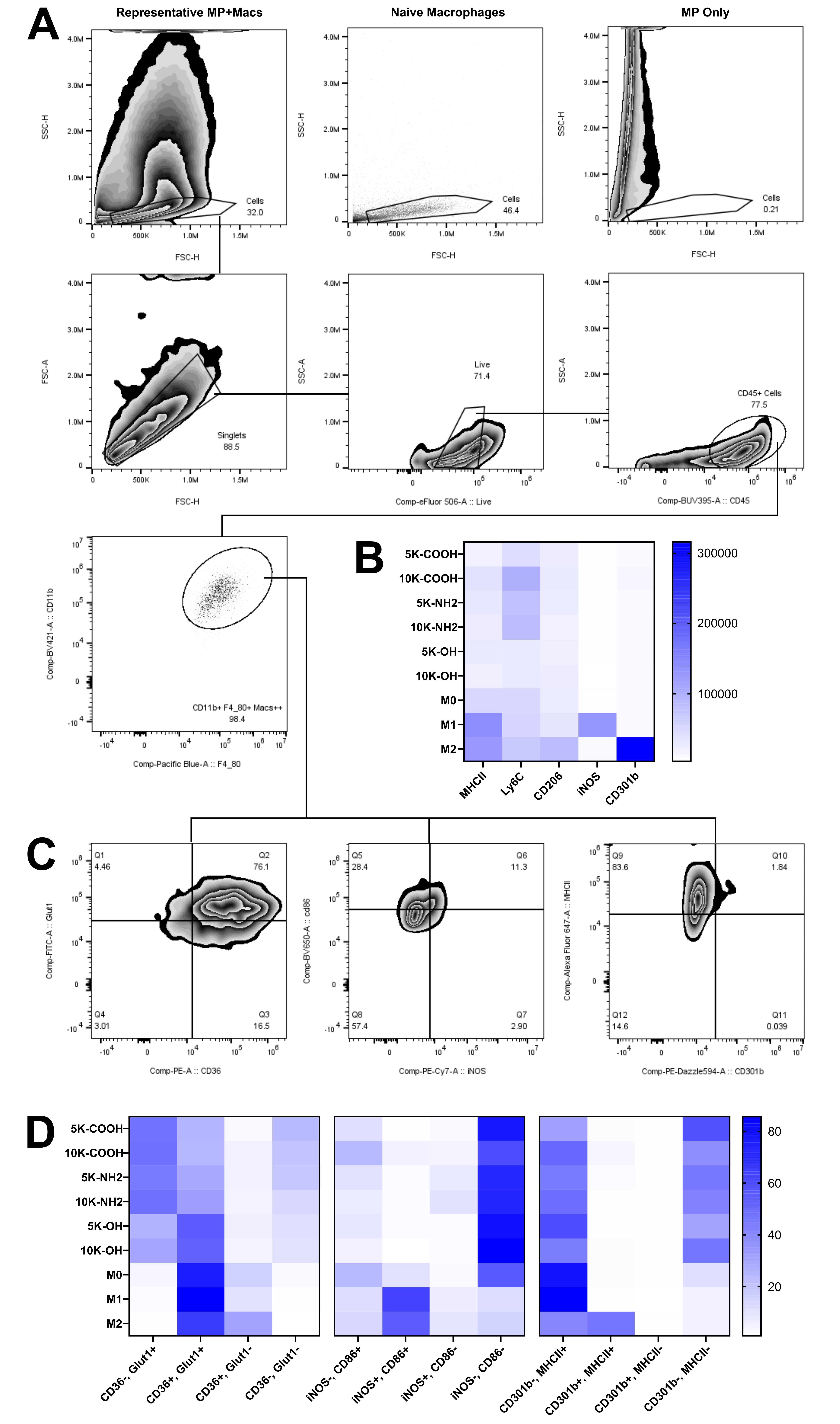 Figure 2 – Bone Marrow Derived Macrophage Co-Culture with Variable End-Cap PLGA Microparticles. Main point of this figure (Co-culture show that MP do not polarize macrophages). (A) Gating strategy for macrophages. (B) Mean fluorescent intensity (MFI) of macrophage phenotype markers. (C) Representative gating for macrophage populations. (D) Quantification of macrophage population frequency. Data shown represents the mean from n = 2 replicates.
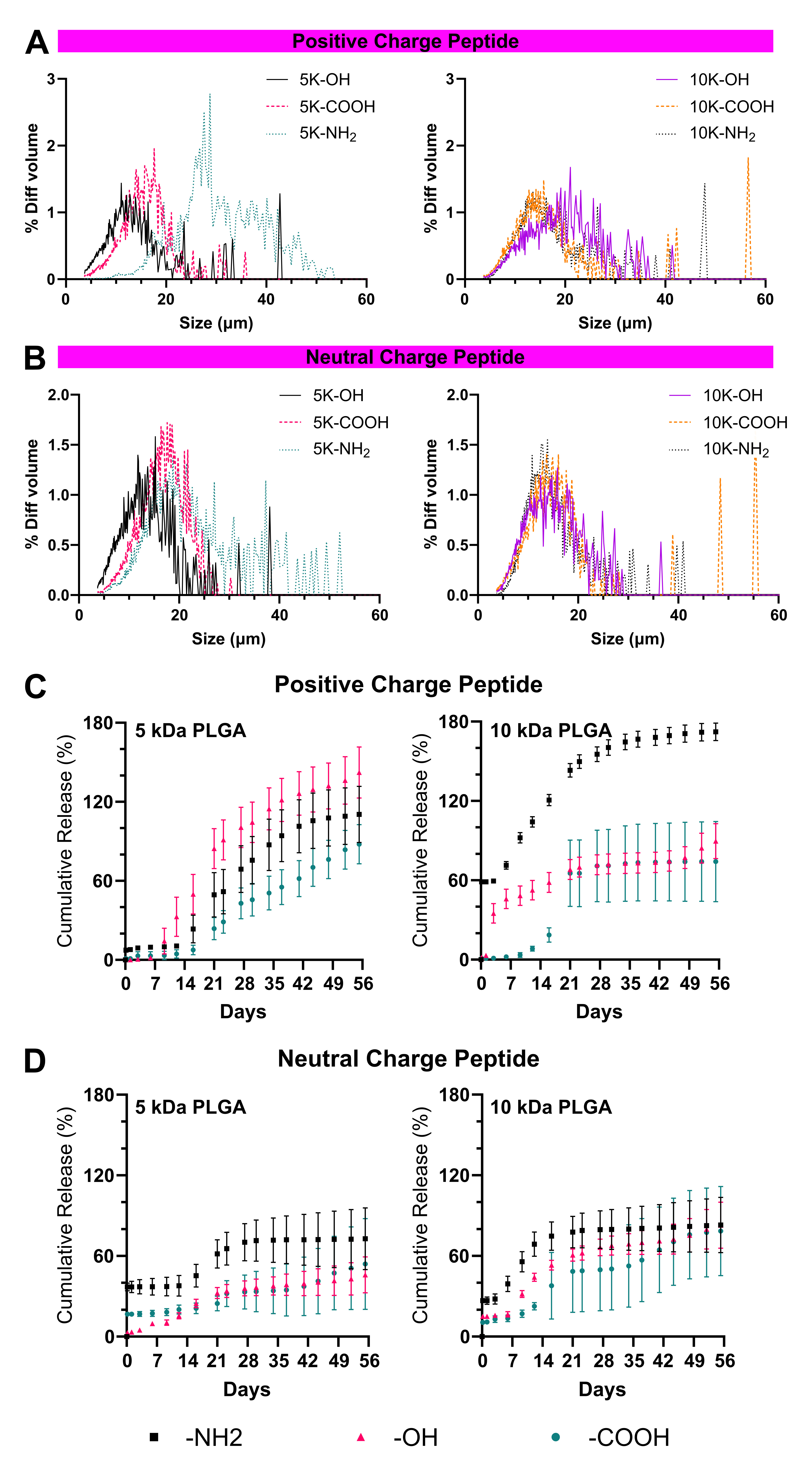 Figure 4 – Peptide MP Size and Release Rate. Main point of this figure Size distribution for positive charge peptide (A) and neutral charge peptide (B). Cumulative release rate (% of encapsulated peptide) of positive charge peptide (C) and neutral charge peptide (D).