
Formulation and Delivery - Chemical
Javier O. Morales, Ph.D.
Pharmaceutical Sciences PhD
Universidad de Chile
Santiago, Region Metropolitana, Chile

Gabriela N. Otavalo, BQF (she/her/hers)
Biochemist and pharmacist
Universidad de Chile
Santiago, Region Metropolitana, Chile
Javier O. Morales, Ph.D.
Pharmaceutical Sciences PhD
Universidad de Chile
Santiago, Region Metropolitana, Chile
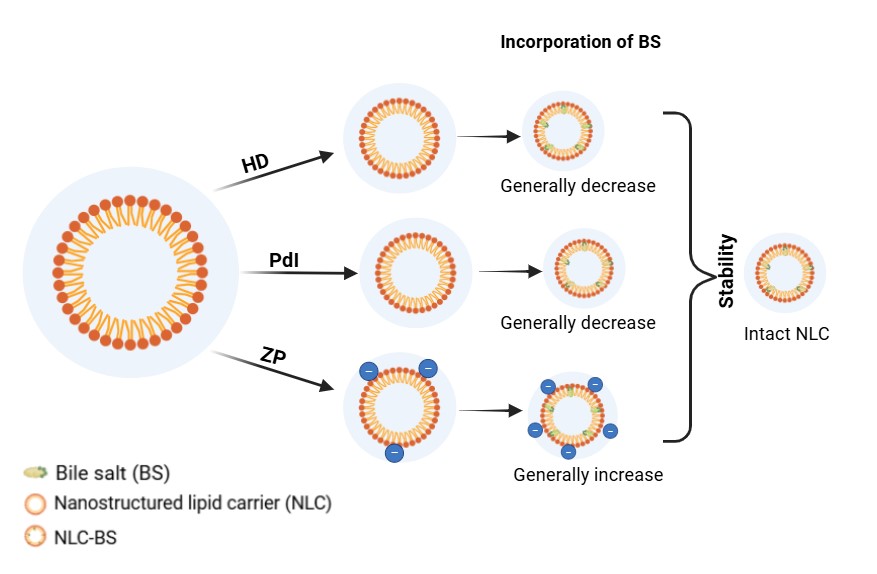 Figure 1. NLC modified with bile salts and analysis of their physicochemical characteristics.
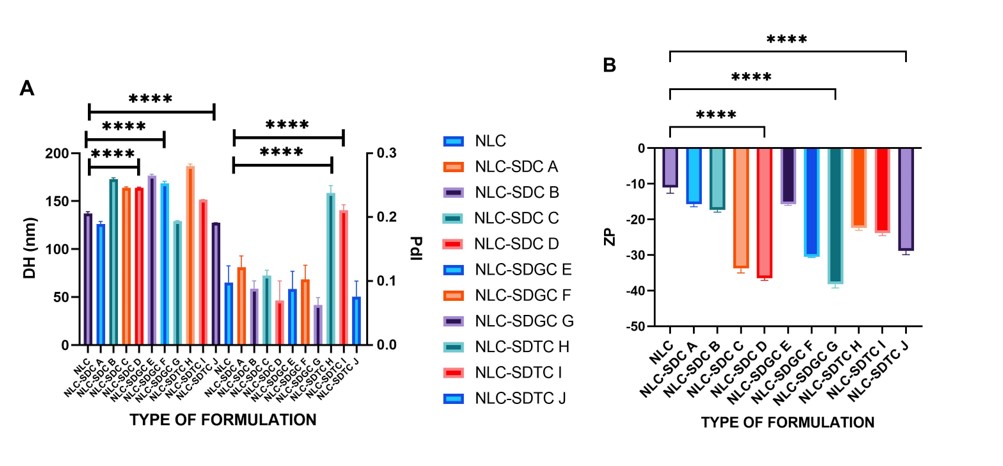 Figure 2. The incorporation of bile salts into NLC formulations has been observed to influence the HD, PdI and ZP of the NLC-BS formulations. A . Hydrodynamic diameter and PdI of NLC-BS formulations with different concentrations of SDC (NLC-SDC A = 2 mM; NLC-SDC B = 6 mM NLC-SDC C = 10 Mm y NLC-SDC D = 15 mM); SDGC (NLC-SDGC E = 2 mM; NLC-SGDC F = 6 mM NLC-SGDC G = 10 Mm) and SDTC (NLC-SDTC H = 2 mM; NLC-STDC I= 6 mM NLC-STDC J = 10 mM). The decrease in HD and PdI is observed with increasing concentration of SDGC and SDTC. Likewise, the increase in HD is also observed with increasing SDC concentration. B. Zeta potential of NLC-BS formulations with the same concentrations indicated above. The increase in ZP is observed with increasing BS concentration. p < .001.
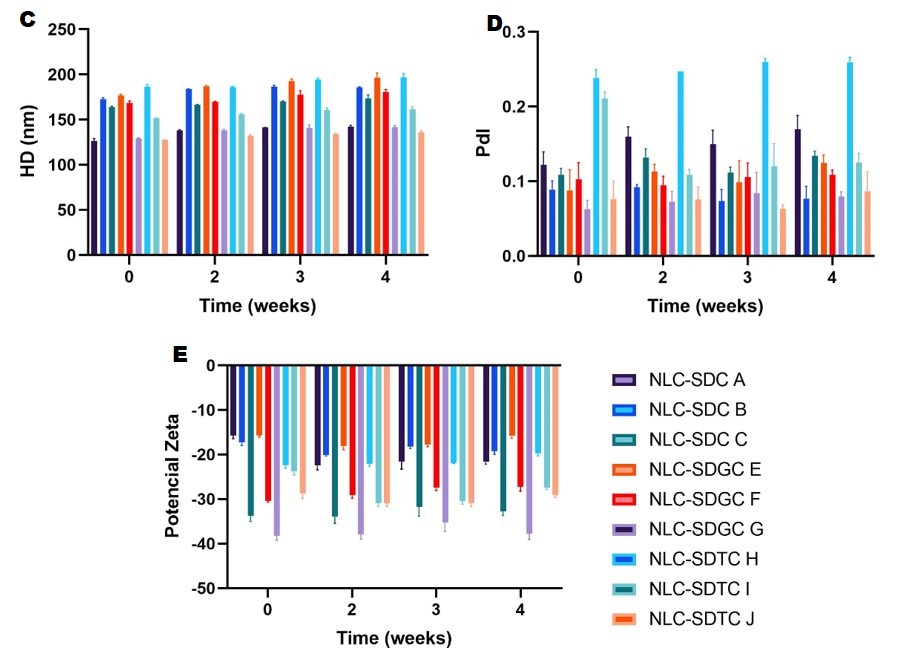 Figure 3. C, D and E. Storage stability tests of the NLC formulations with different concentrations of BS. A.HD. B. PdI. C. Zeta Potential. ° T= 4 °C. The three physicochemical parameters showed minimal variation until the fourth week of storage at 4 °C. The graph depicts the effects of modifying NLCs with SDC, SDGC, and STDC at concentrations of 2, 6, and 10 mM.